RGB to DKL color space
Mostrar comentarios más antiguos
Has anyone done any related work regarding the conversion of the RGB to DKL color space?
the only source i've found was http://search.googlecode.com/svn-history/r79/trunk/CG/matlab/simpsal/rgb2dkl.m, but it doesnt seem to be working correctly.
If anyone has a working script/function for this type of conversion (since the majority of color space conversions are already available to use in the database) plz give your input concerning this.
Thank you
1 comentario

Walter Roberson
el 31 de En. de 2012
"it doesn't seem to be working correctly": If you are going to expect us to play "20 Questions" to find out what problem you are seeing, then you are at least going to have to tell us the traditional, "Animal, Vegetable or Mineral" category to get us started.
Respuesta aceptada
Walter Roberson
el 2 de Feb. de 2012
0 votos
The reverse of this, DKL to RGB, has python source at http://www.psychopy.org/epydoc/psychopy.misc-pysrc.html#dkl2rgb
Note that DKL requires a calibrated monitor!
1 comentario

VisLab
el 3 de Feb. de 2012
Más respuestas (3)

frank
el 21 de Feb. de 2012
2 votos
DKL is a color space which was used to model the colors in the LGN(visual system) whereas the standard Lab is more close to what happens in the Visual cortex. Since there is no processing happening between LGN and V1 hence ideally the signals should be the same yet they were observed to be different, hence dkl was defined which is slightly different from lab. One would find a big difference visually when comparing them. If somebody needs a code, you can go to Laurent Itti's lab webpage and download the visual saliency code which has a function rgb2dkl in matlab. I cannot upload the code since its there copyright, but its freely downloadable.Here's the link: http://www.klab.caltech.edu/~harel/share/gbvs.php
Hope this helps!!
1 comentario
Walter Roberson
el 19 de Mayo de 2020
The klab site does not appear to be available anymore.
I find one MATLAB conversion at https://github.com/sergeyk/vislab/blob/master/matlab/gbvs/util/rgb2dkl.m
VisLab
el 31 de En. de 2012
0 votos
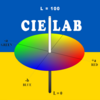
Image Analyst
el 31 de En. de 2012
0 votos
No, I've never heard of that colorspace. What's it reason for being? Why can't you do what you need to do in a more standard space such as HSV or LAB?
4 comentarios
VisLab
el 2 de Feb. de 2012
Image Analyst
el 2 de Feb. de 2012
Sorry, but I've never worked with that colorspace. As far as I know CIE still recommends use of the CIELAB colorspace and Delta E 2010. I'm not sure what Hue constancy is. I know what color constancy is but not sure why that would depend on what colorspace you're using. Maybe you can try the newsgroup sci.engr.color.
VisLab
el 3 de Feb. de 2012
Image Analyst
el 3 de Feb. de 2012
It looks like I remembered incorrectly. I think the 2000 one is the latest, at least according to http://en.wikipedia.org/wiki/Color_difference Be aware though that dE is only valid for values less than about 5, although I use it for values up to about 20 for technical tests that don't need to be correlated that well back to humans.
Categorías
Más información sobre L*a*b* Color Space en Centro de ayuda y File Exchange.
el 25 de En. de 2012
el 19 de Mayo de 2020
Community Treasure Hunt
Find the treasures in MATLAB Central and discover how the community can help you!
Start Hunting!
Translated by 

