Semantic Segmentation
R2026bSemantic segmentation tools in Computer Vision Toolbox™ enable you to perform pixel-level classification of images using both pretrained AI models and custom deep learning networks. You can start by creating labeled ground truth using the Image Labeler and Video Labeler apps, which support interactive and AI-assisted pixel-level annotation in images and videos with class labels. For more information, see Label Pixels for Semantic Segmentation.
The toolbox provides pretrained semantic segmentation models such as BiSeNet V2. You can use these models directly for inference, or adapt them to specific applications. You can also train custom segmentation networks using transfer learning with architectures like U-Net, 3D U-Net, and DeepLab v3+. For more information, see Get Started with Semantic Segmentation Using Deep Learning.
To prepare training data, the toolbox offers utilities for loading and managing data sets along with organizing and analyzing label distributions. The toolbox also supports data augmentation and preprocessing. For more information, see Training Data for Object Detection and Semantic Segmentation.
After you generate predictions using pretrained or custom models, you can
evaluate segmentation predictions against the ground truth, and compute
evaluation metrics like the contour matching score, Sørensen-Dice similarity,
Jaccard similarity, and confusion matrix. For more information, see evaluateSemanticSegmentation.

Apps
| Image Labeler | Label images for computer vision applications |
| Video Labeler | Label video for computer vision applications |
Functions
Topics
Get Started
- Get Started with Semantic Segmentation Using Deep Learning
Segment objects by class using deep learning networks such as U-Net and DeepLab v3+. - Choose Function to Visualize Detected Objects
Compare visualization functions.
Create Ground Truth for Semantic Segmentation
- Label Pixels for Semantic Segmentation
Label pixels for training a semantic segmentation network by using a labeling app. - How Labeler Apps Store Exported Pixel Labels
Learn how the labeling apps store pixel label data.
Prepare Training Data for Semantic Segmentation
- Training Data for Object Detection and Semantic Segmentation
Create training data for object detection or semantic segmentation using the Image Labeler or Video Labeler. - Convert Image Labeler Polygons to Labeled Blocked Image for Semantic Segmentation
Convert polygon labels stored in agroundTruthobject into a labeled blocked image for semantic segmentation workflows. - Datastores for Deep Learning (Deep Learning Toolbox)
Learn how to use datastores in deep learning applications. - Get Started with Image Preprocessing and Augmentation for Deep Learning
Preprocess data for deep learning applications with deterministic operations such as resizing, or augment training data with randomized operations such as random cropping.
Featured Examples
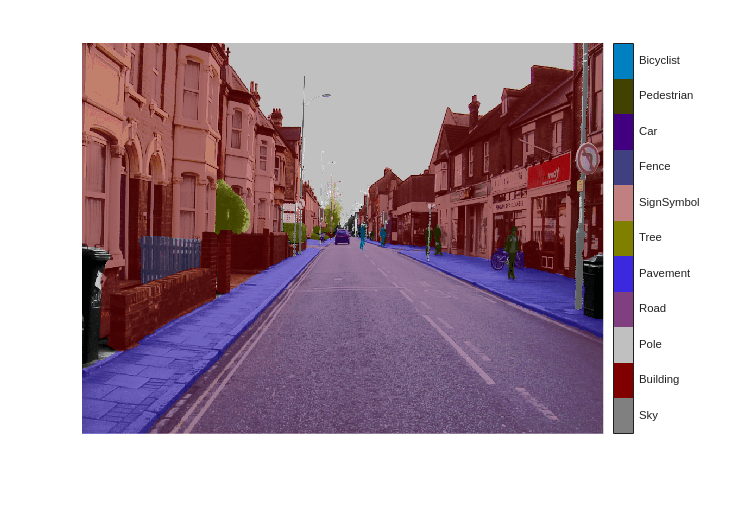
Semantic Segmentation Using Deep Learning
Segment an image using a semantic segmentation network.
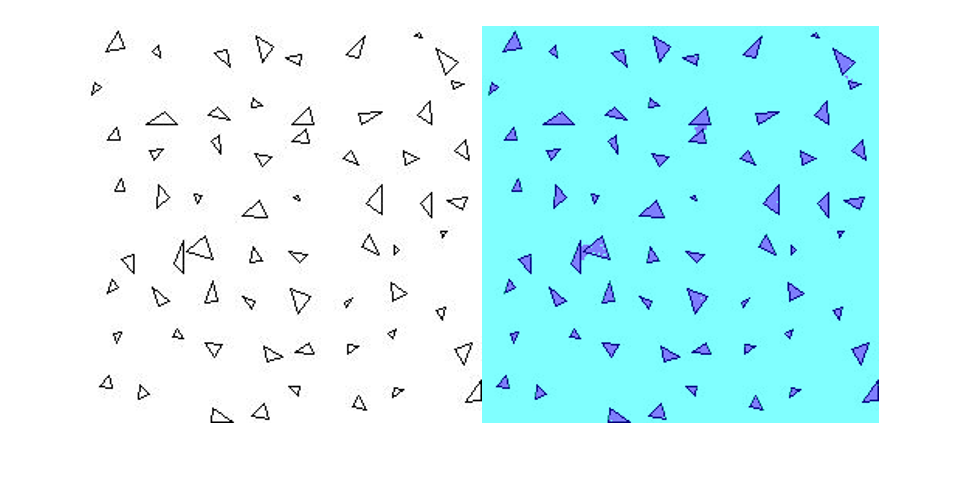
Semantic Segmentation Using Dilated Convolutions
Semantic Segmentation Using Dilated Convolutions.
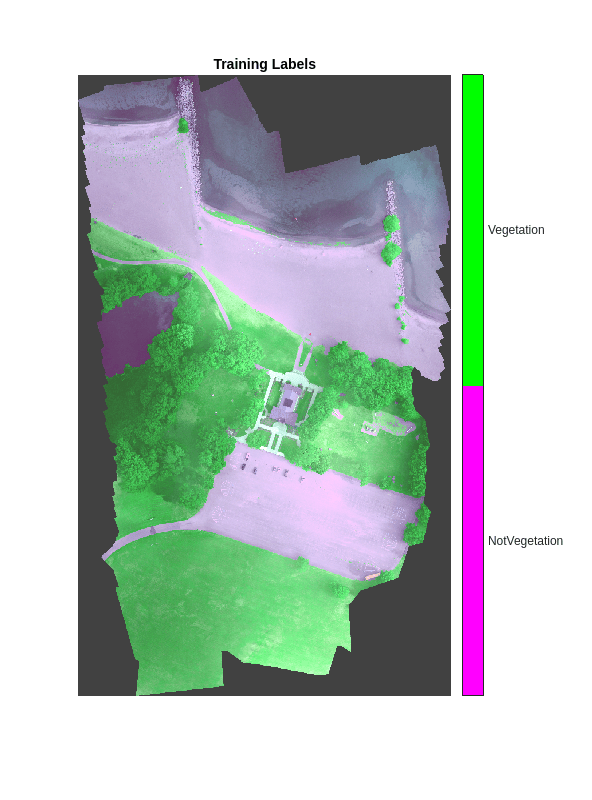
Semantic Segmentation of Multispectral Images Using Deep Learning
Perform semantic segmentation of a multispectral image with seven channels using U-Net.
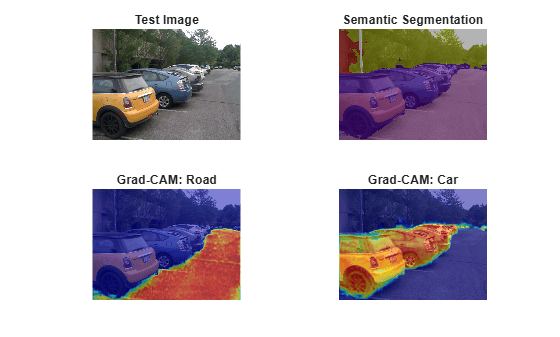
Explore Semantic Segmentation Network Using Grad-CAM
Explore the predictions of a semantic segmentation network using Grad-CAM.
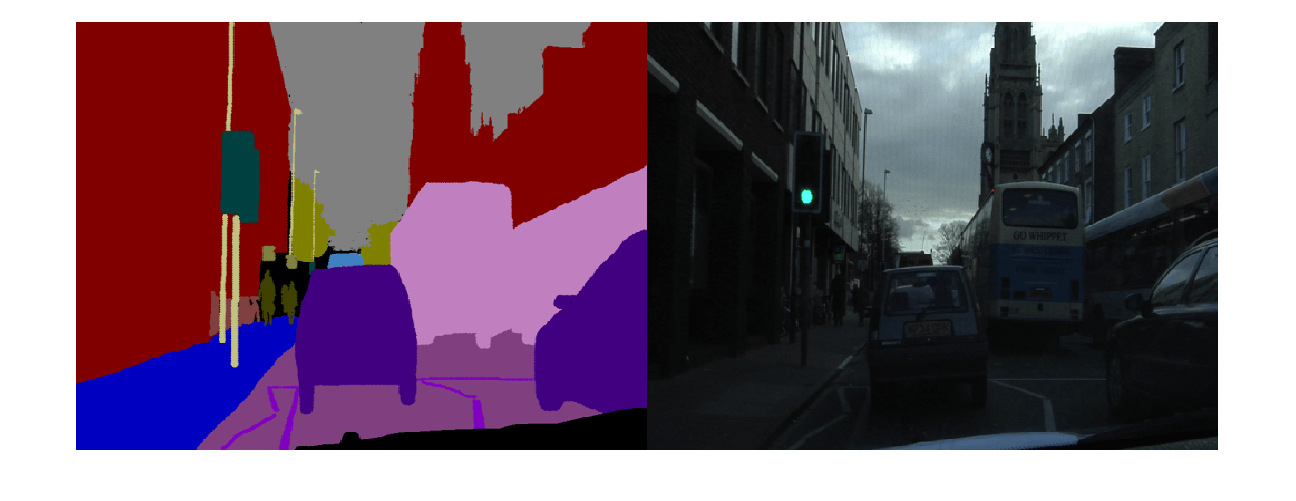
Generate Image from Segmentation Map Using Deep Learning
Generate a synthetic image of a scene from a semantic segmentation map.
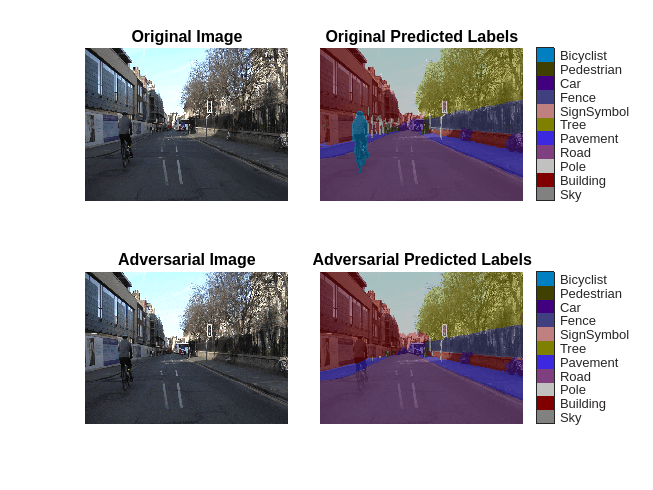
Generate Adversarial Examples for Semantic Segmentation
Generate adversarial examples for a semantic segmentation network using the basic iterative method (BIM).
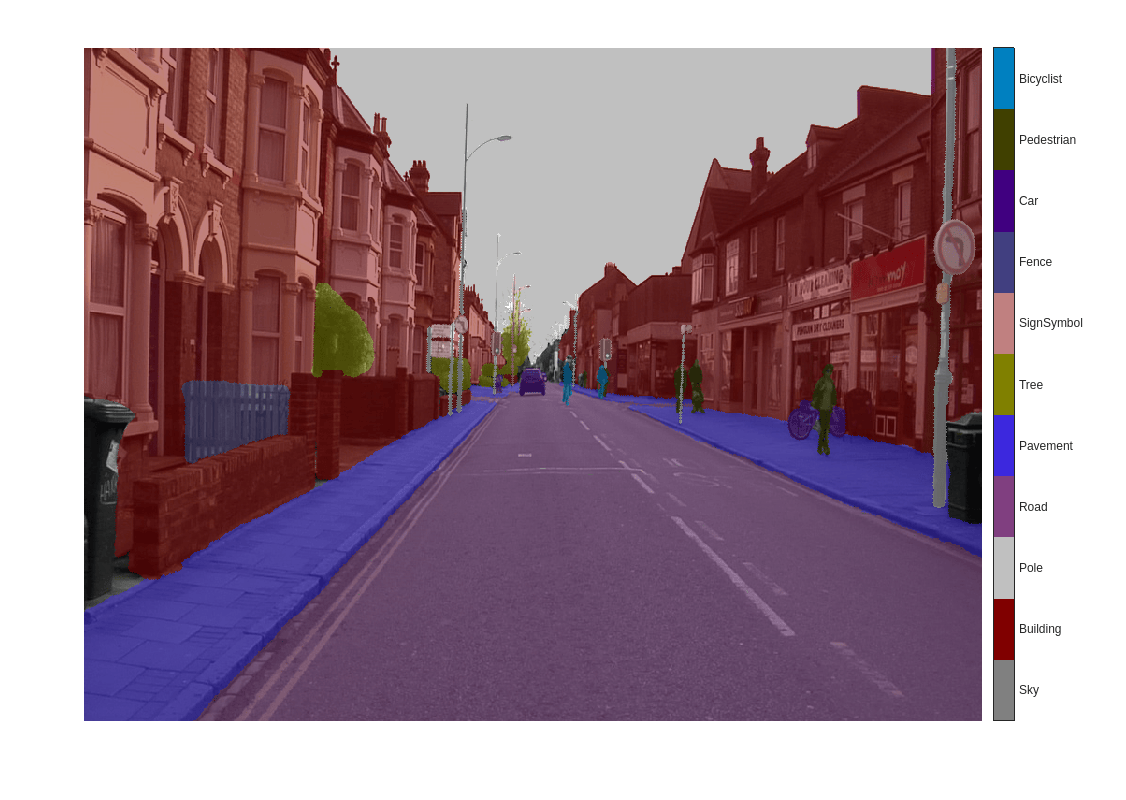
Prune and Quantize Semantic Segmentation Network
Reduce the memory footprint of a semantic segmentation network and speed-up inference by compressing the network using pruning and quantization.
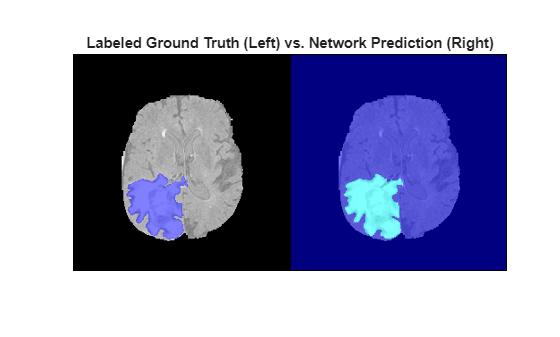
3-D Brain Tumor Segmentation Using Deep Learning
Perform semantic segmentation of brain tumors from 3-D medical images.

